


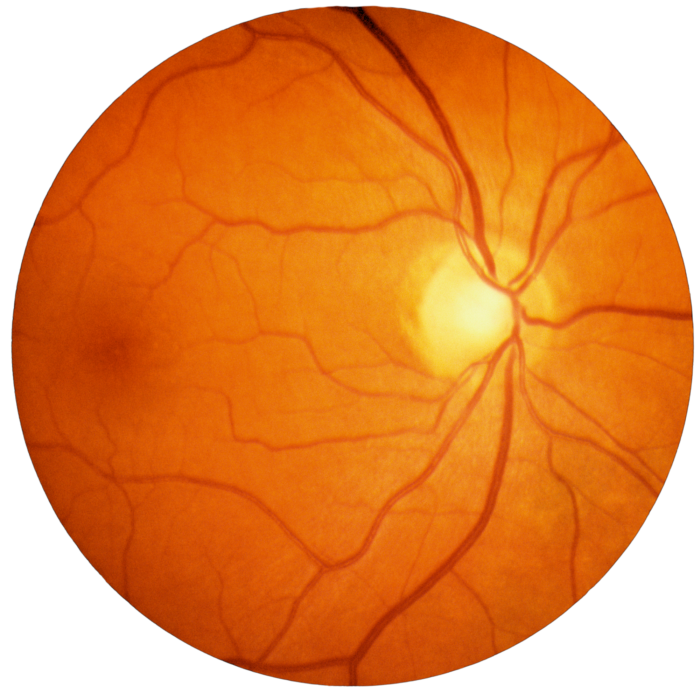
Multimodal Laser Therapy for Intermediate Dry AMD
retinaSEES is a laser-based, non-invasive medical device designed to deliver photothermal and photobiological stimulation through light-tissue interactions for the treatment of intermediate stages of dry AMD.
- Two treatment modalities combined in a single semi-automated device.
- Contactless optics with real-time retinal monitoring.
- Standardised protocols for consistent and personalised treatment delivery.
Most Common Form of AMD,
Often Underdiagnosed
Dry Age-Related Macular Degeneration is the most common form of the disease, accounting for 85–90% of all AMD cases. It progresses silently for years. When left untreated, functional decline can lead to severe vision loss.

Engineered for Seamless Clinical Workflow
Every step of the retinaSEES treatment session, from patient alignment to the laser-delivery report, is designed to support consistent treatment delivery and operational safety, with a workflow that fits routine ophthalmic practice.
Patient Alignment and Setup
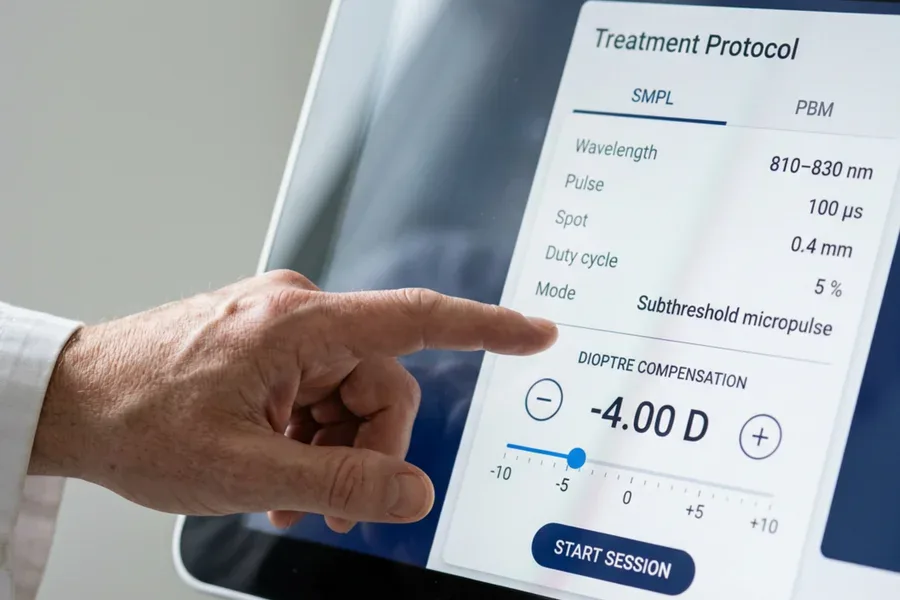
Protocol Configuration
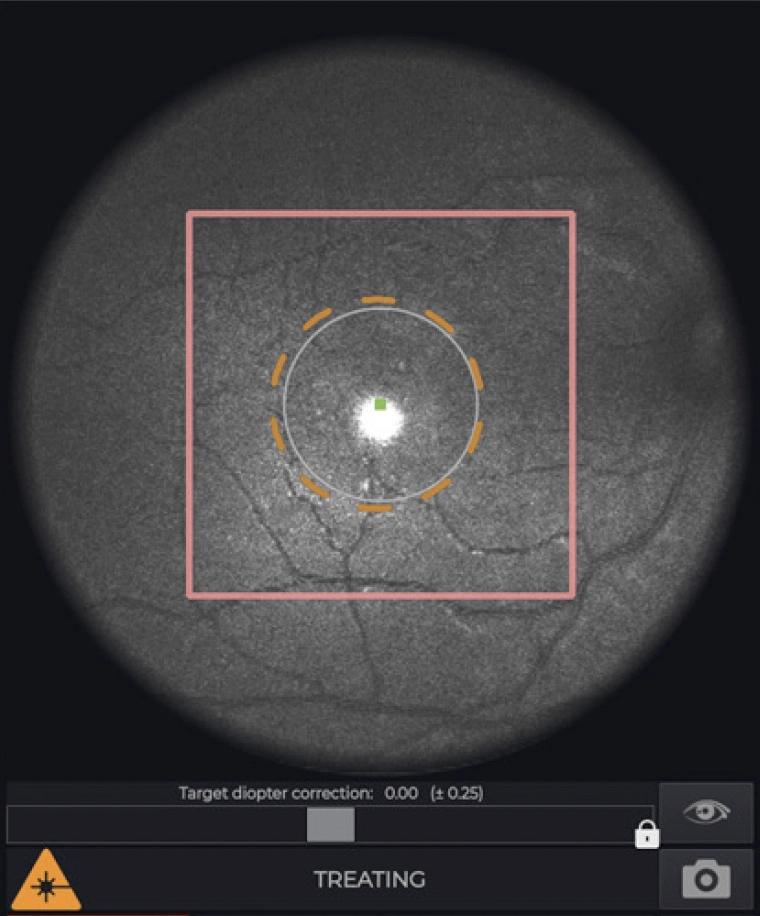
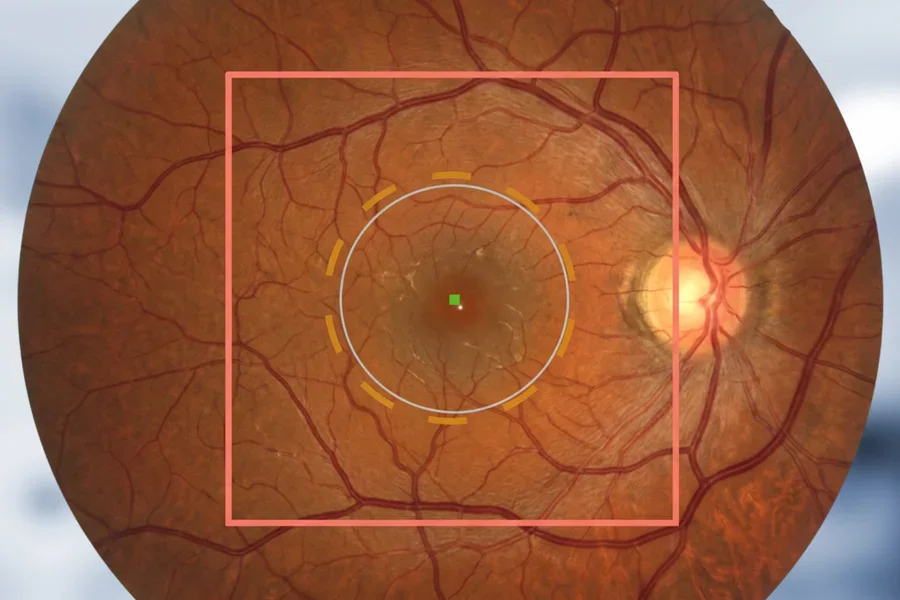
Real-Time Retinal Feedback
Multimodal Laser-Tissue Interaction

How retinaSEES Works at the Cellular Level
retinaSEES utilises a hormetic approach, delivering mild stress to stimulate intrinsic retinal repair mechanism pathways while remaining below the threshold for iatrogenic lesions. The ambition of Oculox is to eradicate the onset of chronic degenerative disorders through the restoration of retinal homeostasis. The NIR therapeutic beam interacts with the target tissues using specific fluence and irradiance parameters, engaging the absorption of two main chromophores: cytochrome c oxidase (CCO) and melanin.2,3,4
Photothermal Stimulation
Subthreshold Thermal Stimulation of the Chorioretinal Tissue ComplexAt moderately high energy densities, the NIR light absorbed by the retinal melanin is converted to heat. This activates Heat Shock Proteins (HSPs),3,4 and related cytokine production, which function as key mediators of cellular signalling, promoting tissue remodelling, cellular recovery, and the re-establishment of homeostasis through endogenous repair mechanisms. The induced temperature-increase stimulus must remain below the threshold for thermal damage.4
Photobiological Stimulation
Mitochondrial ActivationAt low energy densities, heat generation is not effective. On the other side, the absorption of NIR photons by cytochrome c oxidase (CCO) accelerates the respiratory electron transport chain.2 This supports ATP production and induces a signalling response that promotes antioxidant and anti-inflammatory activity.2
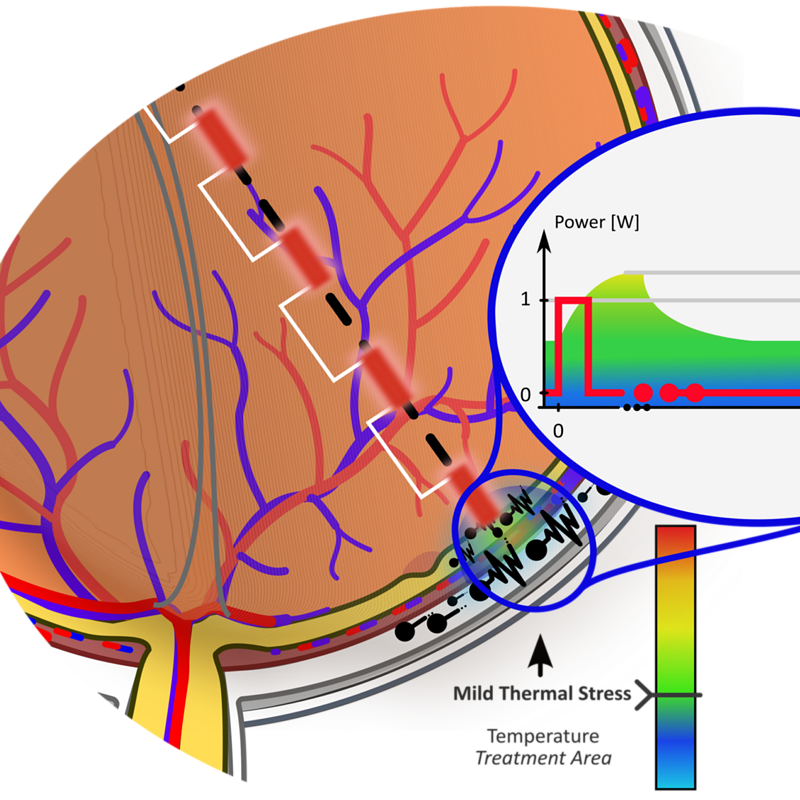
Photothermal StimulationChorioretinal chromophores (mainly melanin) absorb NIR light and act as a localised, microscopic heater. The resulting subthreshold temperature rise is understood to activate heat shock proteins and drive metabolic remodelling3,4.
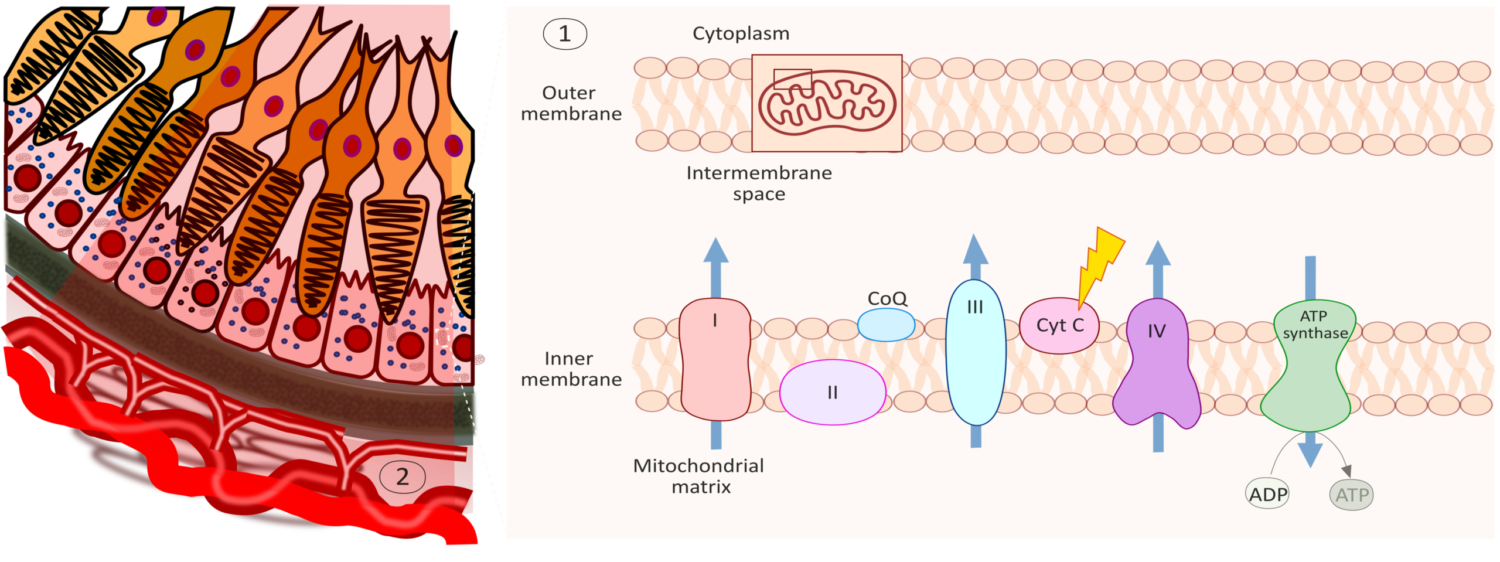
Photobiological StimulationA continuous, slow flow of low-energy 830 nm photons stimulates cytochrome c oxidase in retinal mitochondria, triggering vital downstream signalling pathways that support ATP production and have been associated with reduced photoreceptor apoptosis5.
Current Focus and Directions Explored with Similar Technologies
Initial clinical use focuses on intermediate dry AMD, where therapeutic options remain limited. Related retinal conditions have been explored by others using similar light-based approaches, pointing to the broader potential of the technology.
*These conditions have been investigated by others using photothermal and photobiological laser approaches comparable to retinaSEES. They illustrate the broader potential of this technology class and are not indications, performance claims, or clinical results for retinaSEES.
Research Behind retinaSEES
The retinaSEES device has been described in peer-reviewed work covering its instrumentation and design.
Development of Multi-Mode Retinal Phototherapy Device
Technical introduction of retinaSEES combining photothermal and photobiological stimulation for AMD treatment with real-time cSLO retinal monitoring.
IEEE International Instrumentation and Measurement Technology Conference (I2MTC) 2024
View publicationTalk to the Oculox Team About retinaSEES
Whether you treat AMD patients, lead research, or represent a clinical institution, we would like to hear from you.
Clinicians: Request device specifications or arrange a clinical demonstration of retinaSEES.
Researchers: Enquire about study collaboration, protocol design, or access to clinical data.
Institutions: Contact Oculox to discuss evaluation, procurement, or distribution.
retinaSEES is a CE Class IIb medical device, certified January 2026 under EU Medical Device Regulation 2017/745.
Scientific References
The epidemiological data and the photobiological and photothermal stimulation mechanisms described on this page are referenced to peer-reviewed scientific literature:
1. Fleckenstein M, Schmitz-Valckenberg S, Chakravarthy U. Age-Related Macular Degeneration: A Review. JAMA. 2024;331(2):147–157. DOI: 10.1001/jama.2023.26074
2. Hamblin MR. Photobiomodulation or low-level laser therapy. J Biophotonics. 2016;9(11–12):1122–1124. DOI: 10.1002/jbio.201670113
3. Inagaki K, Shuo T, Katakura K, et al. Sublethal photothermal stimulation with a micropulse laser induces heat shock protein expression in ARPE-19 cells. J Ophthalmol. 2015;2015:729792. DOI: 10.1155/2015/729792
4. Scholz P, Altay L, Fauser S. A review of subthreshold micropulse laser for treatment of macular disorders. Adv Ther. 2017;34(7):1528–1555. DOI: 10.1007/s12325-017-0559-y
5. Eells JT, Gopalakrishnan S, Valter K. Near-infrared photobiomodulation in retinal injury and disease. Adv Exp Med Biol. 2016;854:437–441. DOI: 10.1007/978-3-319-17121-0_58